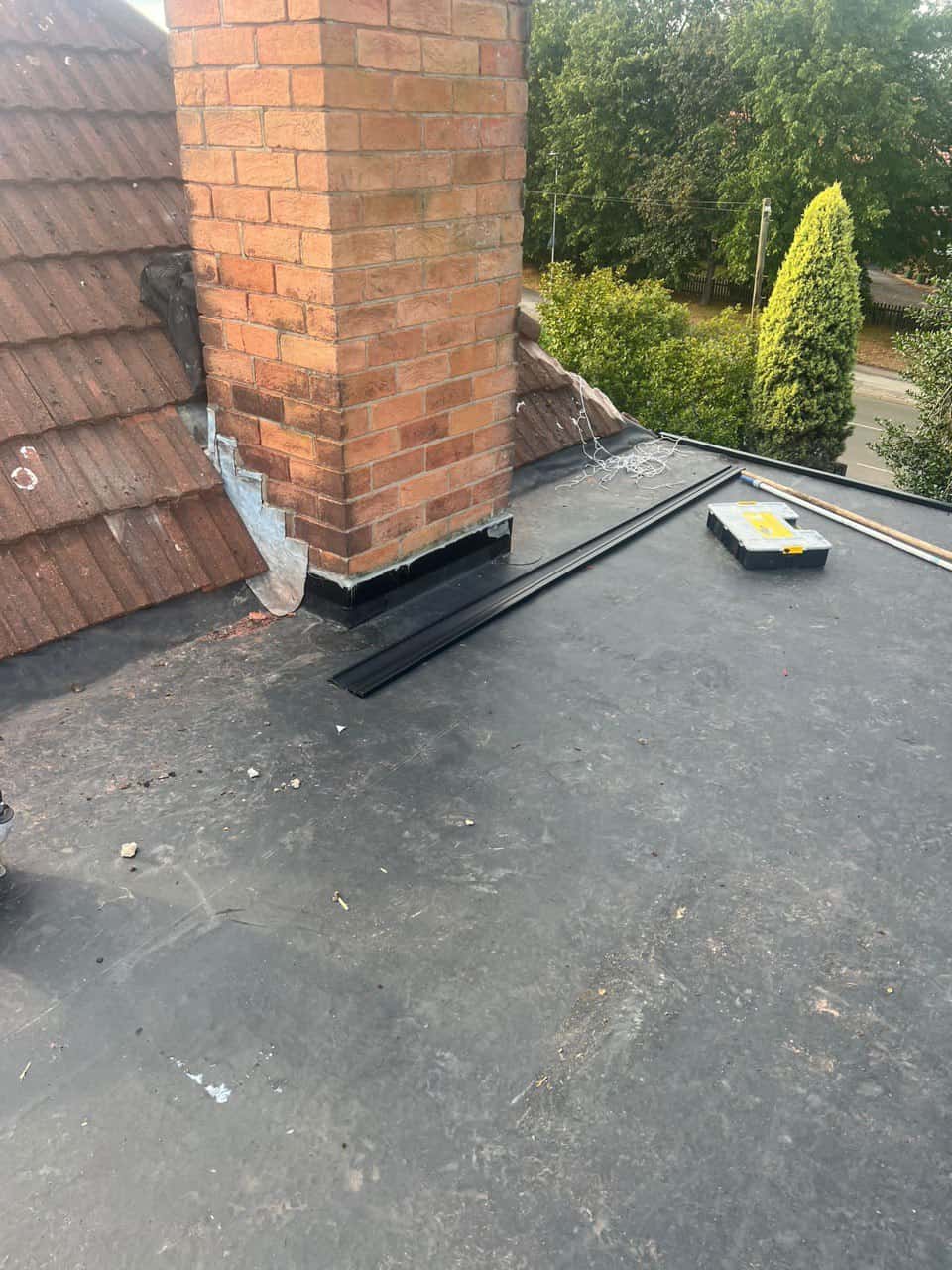
Discovering significant damage to one part of a roof can naturally raise concerns about whether the entire roof needs attention. Fortunately, roofing deterioration does not always occur evenly. One section may suffer from greater weather exposure, localised material failure or problems around a particular roof detail while the remainder continues to perform reliably.
For property owners in Cowplain, Hampshire, renewing only the affected roof section can sometimes provide an effective solution. The key is establishing how far the deterioration extends, whether the adjoining materials remain sound and whether new work can be properly integrated with the existing roof.
Can a Single Damaged Roof Section Be Renewed?
Yes, in suitable circumstances, one section of a roof can be renewed without replacing the entire roofing system. Sectional renewal can be particularly appropriate when deterioration has clear boundaries and the rest of the roof remains in serviceable condition.
The decision should not be based purely on the appearance of the damaged area. A professional assessment needs to determine what caused the deterioration and whether problems extend beneath or beyond the visible roof covering.
When the defect is genuinely contained, renewing the affected section can restore dependable protection while retaining roofing materials that continue to perform correctly elsewhere.
Why Can One Part of a Roof Deteriorate Faster?
Different parts of the same roof can experience different conditions throughout their working life.
One elevation may receive greater exposure to wind-driven rain. Another section may contain valleys, junctions or other details that naturally handle greater amounts of water. Previous workmanship or repairs can also result in one area performing differently from another.
Localised deterioration can therefore develop even when most of the roof remains sound.
This is why a damaged section should not automatically be treated as evidence that the entire roof has reached the same condition.
Determine the True Extent of the Damage
Before deciding whether sectional renewal is appropriate, the full extent of deterioration needs to be understood.
Visible damage provides only part of the picture. Problems with tiles or slates may sometimes be accompanied by deterioration affecting battens, underlay, fixings or other underlying components.
An assessment should therefore establish where sound roofing materials end and damaged materials begin.
Clear boundaries are important because sectional work needs to connect securely with the retained roof. If deterioration continues significantly beyond the proposed repair area, simply renewing the most obvious section may leave weaknesses behind.
Check the Condition of the Remaining Roof
The condition of the rest of the roof is one of the most important considerations.
If surrounding areas remain secure, weather-resistant and structurally suitable, there may be little reason to disturb them. Retaining sound roofing materials can be a sensible and proportionate approach.
However, if similar deterioration is appearing across multiple sections, renewing only one area may not address the wider problem.
A whole-roof inspection can therefore be valuable even when the intention is to renew only a specific section. It provides the context needed to determine whether localised work is genuinely suitable.
Successful Sectional Renewal Depends on Good Integration
A renewed section cannot be considered in isolation. It needs to work correctly with the original roof around it.
Particular attention may be required where new and existing materials meet. These transition points must remain secure and capable of directing rainwater correctly.
Depending on the roof design, this may involve careful consideration of:
- Tiles or slates
- Battens and underlay
- Roof junctions
- Ridges and verges
- Valleys
- Leadwork and flashing
- Fixings
- Changes in roof level or direction
Good workmanship at these interfaces is essential. The objective is for the renewed section and retained roof to function together as one dependable roofing system.
Can Only Part of the Roof Covering Be Replaced?
In some situations, deterioration is concentrated mainly within the external roof covering.
If a defined area contains damaged or unreliable tiles or slates while the surrounding covering remains serviceable, replacing the affected materials may be possible.
However, the underlying components should still be considered. Installing replacement covering over deteriorated supporting materials would fail to address the complete problem.
This is why the appropriate scope of work should only be decided after the affected section has been properly assessed.
What If the Damage Extends Beneath the Tiles or Slates?
Not all roofing deterioration is immediately visible from outside.
Water penetration can affect components beneath the roof covering, while damaged underlay or battens may contribute to recurring problems even when the visible materials appear relatively intact.
Where underlying deterioration is discovered, the affected area may need to be opened sufficiently to reach sound material.
This does not necessarily mean the whole roof requires renewal. It simply means the boundaries of the work should be determined by the actual condition found rather than the size of the visible defect.
Previous Repairs Can Help Reveal the Condition of a Section
A roof’s maintenance history can provide useful information when deciding whether sectional renewal is appropriate.
If one area has required repeated repairs while the remainder of the roof has performed reliably, it may indicate that deterioration is concentrated within that particular section.
Renewing the problematic area more comprehensively can sometimes be more appropriate than continuing to repair individual defects within it.
Conversely, if repairs have been required across numerous unrelated areas, a broader assessment becomes increasingly important before deciding on sectional work.
Matching New Work With the Existing Roof
Performance should always be the priority, but the relationship between replacement and existing roofing materials also deserves consideration.
New materials need to be suitable for the roof and installed correctly alongside those being retained. Differences caused by natural weathering can sometimes make newer materials more noticeable initially, particularly on an older roof.
The technical connection is more important than achieving an artificially identical appearance. The renewed area should integrate securely, manage water correctly and avoid creating unnecessary weaknesses at its boundaries.
Sectional Renewal Should Address the Cause, Not Just the Damage
Renewing a damaged area without understanding why it deteriorated can allow the same problem to develop again.
If the original failure resulted from a vulnerable junction, inadequate detailing or another underlying defect, that issue should be addressed as part of the work.
For example, replacing deteriorated roof coverings may not provide the desired result if water is actually entering through defective flashing nearby.
Accurate diagnosis allows the renewed section to resolve the underlying weakness rather than simply replacing visibly damaged materials.
When Is Sectional Roof Renewal Less Suitable?
There are circumstances where concentrating on one area may not provide the most dependable result.
If deterioration is widespread, roofing materials are generally fragile or several different sections are developing recurring problems, the roof needs to be considered more broadly.
The important question is whether enough reliable existing material remains for sectional renewal to integrate successfully.
A professional assessment should provide a proportionate recommendation. Sound areas should not be disturbed unnecessarily, but wider deterioration should not be overlooked simply because one section currently appears worse than the rest.
Professional Roof Assessment in Cowplain, Hampshire
At Cowplain Roofing Repairs, we assess the damaged area alongside the condition of the surrounding roof before recommending the appropriate work.
This allows us to determine whether the problem is genuinely localised, how far any deterioration extends and whether renewing a specific section can provide a reliable result.
For property owners in Cowplain, Hampshire, this approach helps avoid assumptions about the condition of the entire roof and ensures that proposed repairs reflect what the roofing system actually requires.
Conclusion
One damaged roof section does not automatically mean that everything needs replacing. When deterioration is clearly contained and the remainder of the roof remains sound, sectional renewal can be an effective way to restore the affected area while retaining serviceable roofing materials elsewhere.
The success of this approach depends on accurate assessment. The cause and extent of the damage, condition of underlying components, reliability of surrounding materials and connection between new and existing work all need to be considered.
If one section of your roof in Cowplain, Hampshire has become damaged or repeatedly requires attention, contact Cowplain Roofing Repairs. We can assess the affected area and wider roof condition before recommending a suitable solution based on the work genuinely required.
Call us on: 023 9387 2689
Click here to find out more about Cowplain Roofing Repairs
Click here to complete our contact form and see how we can help with your roofing needs.